The Historical Loss of Native Woodlands in Ireland
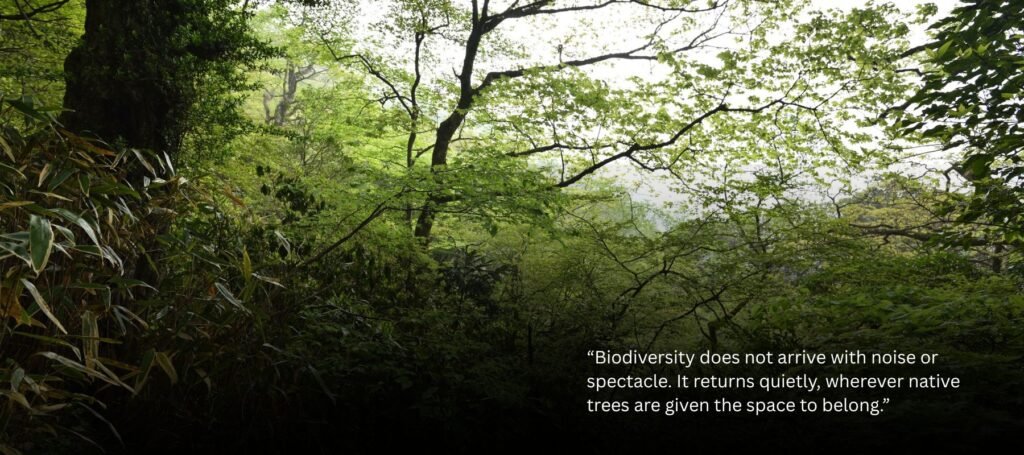
Ireland was once heavily wooded, with native forests covering much of the landscape. Over centuries, land clearing for agriculture and development reduced woodland cover dramatically. As forests disappeared, wildlife habitats fragmented. Today, many species survive only in isolated patches of native woodland, hedgerows and river corridors. Restoring native Irish trees is central to reversing this long-term decline.
Why Native Trees Create Better Wildlife Habitats
Each native tree species supports different forms of life. Oak trees host hundreds of insect species, which in turn feed birds and mammals. Hawthorn provides nectar in spring and berries in autumn. Willow supports aquatic ecosystems by shading streams and stabilising banks. When planted together, native trees form layered woodland habitats that provide year-round food and shelter for wildlife.
Birds as Indicators of Woodland Health
Bird populations often reflect the condition of a woodland ecosystem. In native Irish woodlands, species such as robins, wrens, bullfinches, chiffchaffs and sparrowhawks find the structure and food supply they need. Woodpeckers depend on mature trees and deadwood. Treecreepers rely on textured bark. When these birds return, it signals that biodiversity is rebuilding from the ground up.
The Importance of Deadwood and Woodland Layers
Healthy native woodlands are not tidy. Deadwood, fallen branches and leaf litter play essential ecological roles. Rotting wood supports fungi and beetles. Beetles feed birds. Leaf litter shelters amphibians and small mammals. A fully functioning woodland contains multiple layers: canopy, understorey, shrub, herb and soil. Each layer holds distinct communities of wildlife. Together, they create a self-sustaining ecosystem.